Crochet pullover sweaters are one of the most satisfying garments to make because they combine comfort, creativity, and wearability in one beautiful project. They are cozy enough for cooler days, stylish enough to become wardrobe staples, and versatile enough to be dressed up or down depending on the yarn, fit, and stitch pattern you choose. Unlike smaller crochet items, a pullover gives you the chance to work on something substantial while still enjoying the calm rhythm of crochet row by row.
What makes crochet pullovers especially appealing is how much personality they can carry. A sweater can feel soft and coastal, oversized and relaxed, textured and classic, or bold and modern depending on the design. Some pullovers are all about drape and easy layering, while others use stitch texture to become the star of the outfit. That is what makes them such a rewarding handmade project: they are practical, but they still leave plenty of room for style.
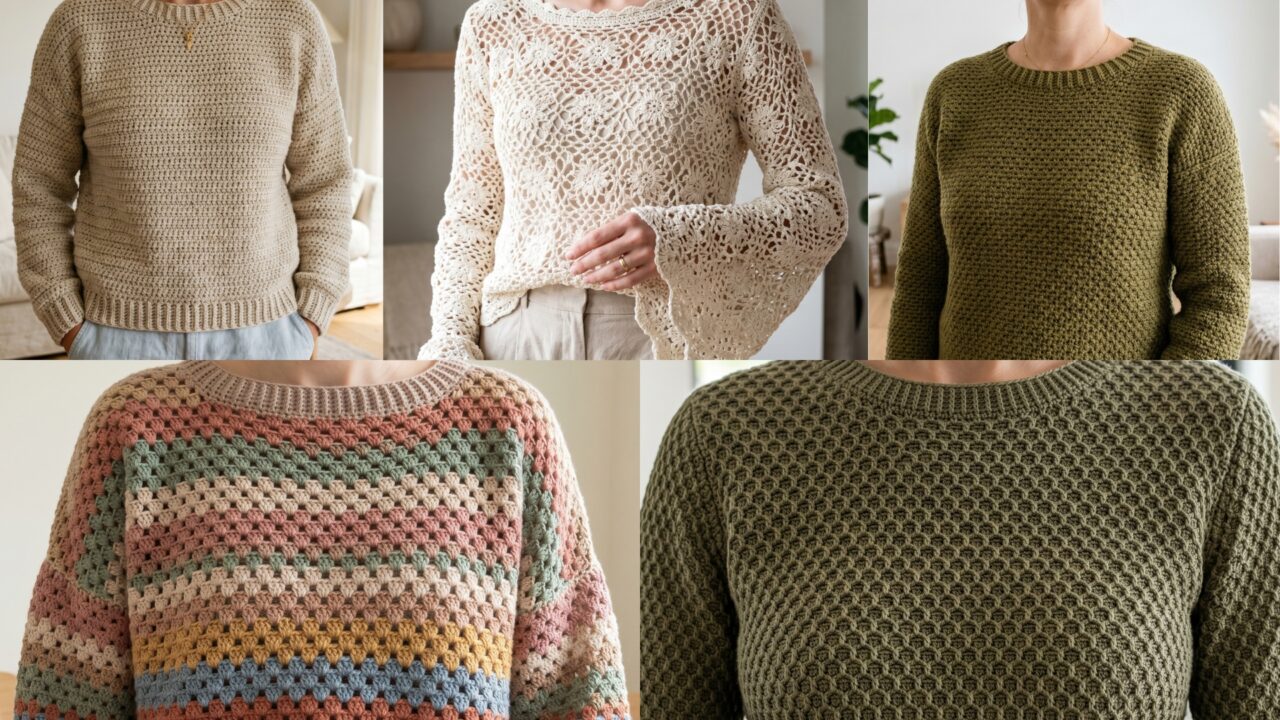
In this post, you will find five stylish crochet pullover sweater patterns with detailed step-by-step guidance, helpful notes, and finishing tips to help you create garments that look polished and feel comfortable. Whether you are making your first pullover or adding another favorite piece to your handmade wardrobe, these ideas are a great place to start.
Quick Notes
Project type: Crochet pullover sweaters
Best for: Handmade fashion, layering, cozy everyday wear, gifts, and seasonal wardrobes
Skill level: Beginner to intermediate, depending on shaping and stitch detail
Hook size: Usually 4.0 mm to 6.5 mm depending on yarn weight and drape
Yarn weight: DK, worsted, sport, or light bulky yarn
Best yarn choice: Cotton blends, soft acrylic blends, or wool blends with good drape and structure
Finished size: Customizable to bust, sleeve length, and torso measurements
Time to complete: Several days to a few weeks depending on size and stitch complexity
Helpful stitches: Chain, slip stitch, single crochet, half double crochet, double crochet, granny stitch, moss stitch, honeycomb stitch, increases, decreases, seaming, ribbing, neckline shaping, sleeve construction, and blocking
Common Materials
Most crochet pullover sweaters use a similar set of supplies.
- Yarn in your chosen colors
- Crochet hook suited to the yarn
- Yarn needle
- Scissors
- Stitch markers
- Measuring tape
- Blocking tools
- Row counter, optional
- Pattern notes or stitch chart, optional
For sweaters, yarn choice matters a lot because the garment needs to drape well while still keeping its shape. A yarn that is too stiff may feel bulky, while a yarn that is too loose may stretch out over time. The best sweater yarn usually feels soft, wearable, and balanced.
1. Crochet Stony Shore Pullover Pattern
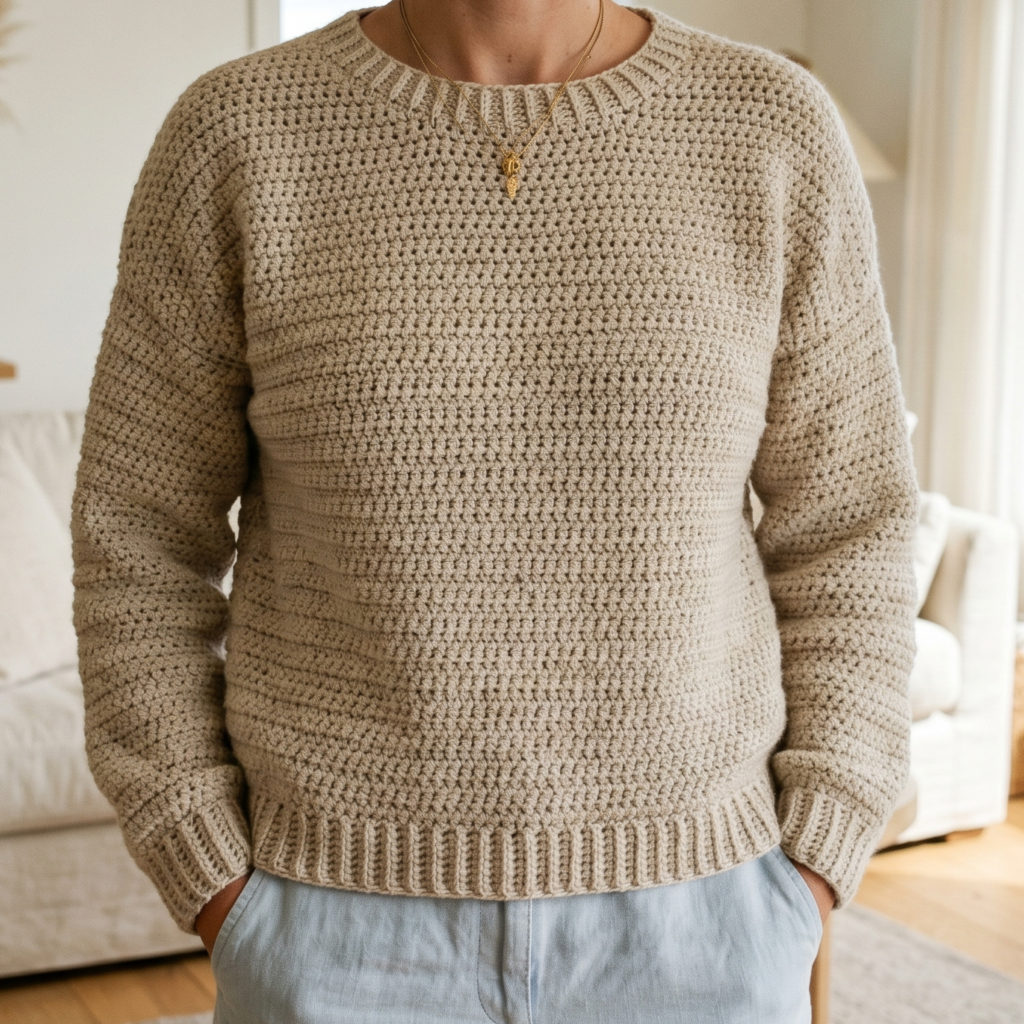
The Stony Shore pullover feels calm, natural, and easy to wear. It has that relaxed, coastal-inspired style that makes it perfect for everyday outfits, especially when you want something simple but still elegant. This is the kind of sweater that feels comfortable enough for lounging but polished enough to wear out.
Step-by-step guide
Step 1: Choose a coastal color palette
Start with a color that feels earthy and calm. Soft gray, stone, sand, misty blue, or oatmeal all work beautifully for a Stony Shore look. These tones give the sweater a quiet, timeless feel that pairs easily with many outfits.
The color sets the mood of the pullover.
Step 2: Take your measurements
Measure your bust, shoulder width, torso length, and sleeve length before you begin. A pullover should feel comfortable over the body while still looking intentional. Decide whether you want a fitted, relaxed, or slightly oversized shape.
Good measurements help the sweater fit beautifully.
Step 3: Crochet the body panels
Begin with the front and back panels, or work top-down depending on your preferred construction. Keep the stitch pattern simple and even so the focus stays on the relaxed shape and soft yarn. The body should feel smooth and easy to layer.
The body creates the sweater’s overall silhouette.
Step 4: Shape the neckline
Whether you want a crew neckline or a slightly wider opening, shape it carefully so the sweater feels comfortable to wear. Keep the shaping gradual and balanced, especially if you want the neckline to sit neatly.
A clean neckline makes the sweater look polished.
Step 5: Add the sleeves
Crochet the sleeves in the same stitch pattern or a simple matching texture. Keep them relaxed but not too wide. Slightly tapered cuffs can help the sleeves sit nicely at the wrist and keep the sweater feeling refined.
The sleeves complete the cozy shape.
Step 6: Join the panels
If you are using separate panels, sew the shoulders and sides together carefully. Smooth seams are important because they help the sweater drape properly. Leave enough space for the armholes so movement feels easy.
A neat join improves the final fit.
Step 7: Finish the edges
Add borders along the neckline, cuffs, and hem. A simple ribbed edge or clean single crochet border works especially well. Keep the finishing understated so the calm, coastal style stays front and center.
Step 8: Block lightly
Blocking helps the sweater settle into shape and smooths the fabric. It is especially helpful for soft, neutral designs because it gives the sweater a more refined finish.
Helpful tips
This pullover looks especially beautiful in stone gray, mist blue, or sandy beige. If you want a more modern version, keep the shape relaxed and the details minimal. It is a great everyday sweater for layering with jeans, skirts, or simple pants.
2. Crochet Flared Sleeves Pullover Pattern
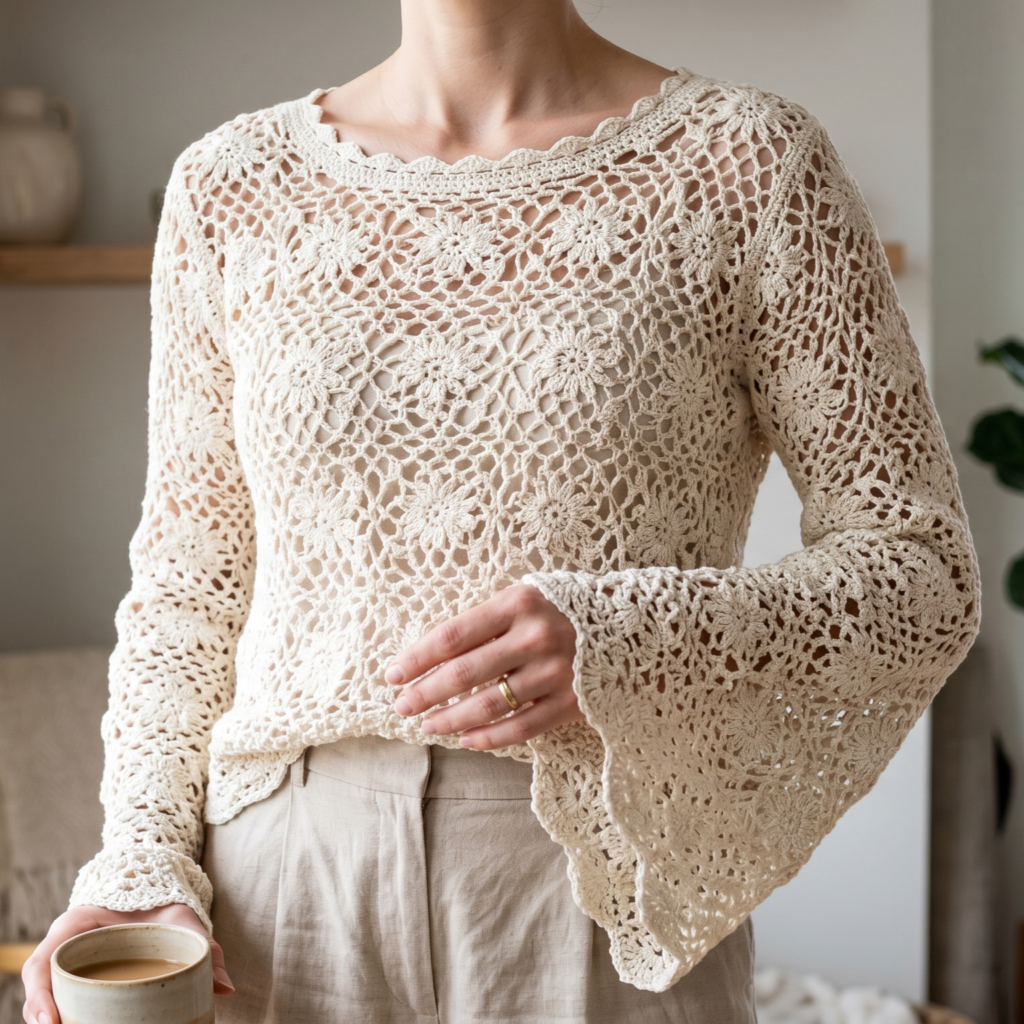
A flared sleeves pullover feels stylish, feminine, and a little dramatic in the best way. The flared sleeves give the sweater movement and softness, while the body stays simple enough to balance the statement shape. This is a great choice if you want a pullover that feels special but still wearable.
Step-by-step guide
Step 1: Select a yarn with good drape
Choose a yarn that flows nicely and does not feel too stiff. Cotton blends, soft acrylics, or lightweight wool blends work beautifully for flared sleeves because they allow the fabric to hang naturally. A soft, medium-tone color usually works well.
The yarn should support movement and shape.
Step 2: Measure for body and sleeve fit
Take measurements for the bust, sleeve length, upper arm, and torso. Flared sleeves need enough room at the upper arm and enough length to let the flare open comfortably. The body should still fit well so the sleeves remain the focus.
A good fit makes the sleeves stand out.
Step 3: Crochet the body
Work the front and back panels with a simple, balanced stitch pattern. Keep the body clean and smooth so the sleeves can become the statement detail. A plain body also makes the flared sleeves feel more elegant.
The body provides contrast for the sleeves.
Step 4: Shape the neckline
Create a neckline that feels flattering and comfortable. A crew neck, shallow boat neck, or soft scoop can all work well. Keep the neckline neat so it complements the open sleeve shape.
A simple neckline keeps the sweater balanced.
Step 5: Crochet the flared sleeves
Start the sleeves more fitted at the upper arm, then gradually increase toward the cuff or wrist to create a flare. The flare should feel soft and graceful rather than exaggerated unless you want a bold fashion look. Keep the increases even so the sleeves fall beautifully.
The flare is the defining feature of the sweater.
Step 6: Join the sleeves to the body
Attach the sleeves carefully so the flare begins at the right place. Make sure both sleeves match in length and width so the sweater feels symmetrical. Take your time with the seam so the flare hangs correctly.
Step 7: Finish the cuffs and hem
Add a neat border at the cuffs and bottom hem. A simple border works best because the sleeves already create visual interest. If you want a more fashion-forward look, keep the edges very clean and minimal.
Step 8: Block the sleeves
Blocking is especially helpful for flared sleeves because it helps the shape open nicely and prevents the fabric from curling at the edges. Shape the flare while it dries so the sleeves look smooth and intentional.
Helpful tips
This pullover looks lovely in soft neutrals, rose, cream, or even deeper jewel tones. If you want a more boutique feel, keep the body simple and let the sleeves do the work. It is a beautiful sweater for outfit styling and layering.
3. Crochet Moss Stitch Pullover Sweater Pattern
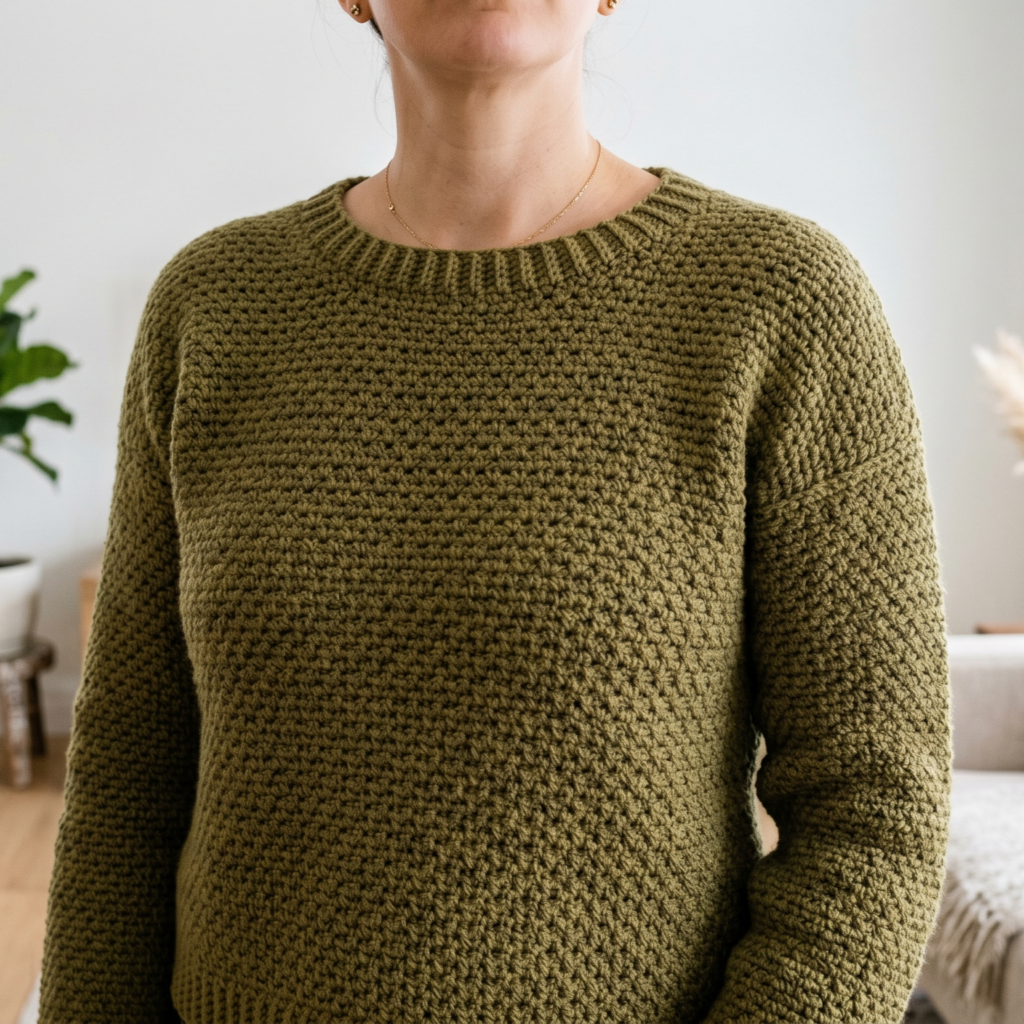
A moss stitch pullover sweater feels textured, modern, and wonderfully comfortable. Moss stitch has a woven-like appearance that gives the sweater a clean, understated look. It is a lovely option if you want something classic and wearable with just enough texture to make it interesting.
Step-by-step guide
Step 1: Choose a yarn with clear stitch definition
Because moss stitch has a subtle woven texture, choose a yarn that shows the stitches clearly. Cotton blends, soft acrylic, or light wool blends all work well. Solid colors often look especially nice with moss stitch because the texture becomes the star.
The yarn should highlight the stitch pattern.
Step 2: Measure the fit
Take the bust, shoulder, sleeve, and torso measurements before starting. Moss stitch creates a fairly dense fabric, so the sweater should have enough ease to feel comfortable without feeling too bulky. Decide whether you want a fitted or relaxed shape.
A careful fit keeps the sweater wearable.
Step 3: Crochet the front and back panels
Work the front and back using the moss stitch repeat. Keep the rows even and consistent so the texture stays smooth. Moss stitch grows beautifully row by row, so the fabric should feel calm and balanced.
The stitch pattern is the main feature.
Step 4: Shape the neckline and armholes
If you are using separate panels, shape the neckline and armholes gradually. Keep the edges neat and the shaping gentle so the sweater stays comfortable and easy to layer over other clothes.
Step 5: Add the sleeves
Crochet the sleeves in moss stitch or a simpler matching texture. Make sure the sleeves are not too tight, especially if you want to layer the sweater over long sleeves. A slightly tapered cuff can help the sleeves sit nicely.
The sleeves should match the sweater’s clean look.
Step 6: Join the panels
Sew the shoulders and sides together neatly. Because moss stitch has a textured surface, clean seams help the sweater look more polished. Keep the armhole openings balanced so the fit remains comfortable.
Step 7: Finish the edges
Add borders around the neckline, cuffs, and hem using a clean edge or ribbing. A simple border will frame the moss stitch beautifully and make the sweater feel finished.
Step 8: Block gently
Blocking helps the moss stitch even out and improves the drape. This is especially useful if your yarn has a little curl or if the edges need smoothing.
Helpful tips
This sweater looks especially nice in olive, gray, oatmeal, or soft blue. If you want a more minimal wardrobe piece, choose one neutral shade and let the texture do all the work. It is a great pullover for everyday layering.
4. Crochet Granny Striped Oversized Pullover Pattern
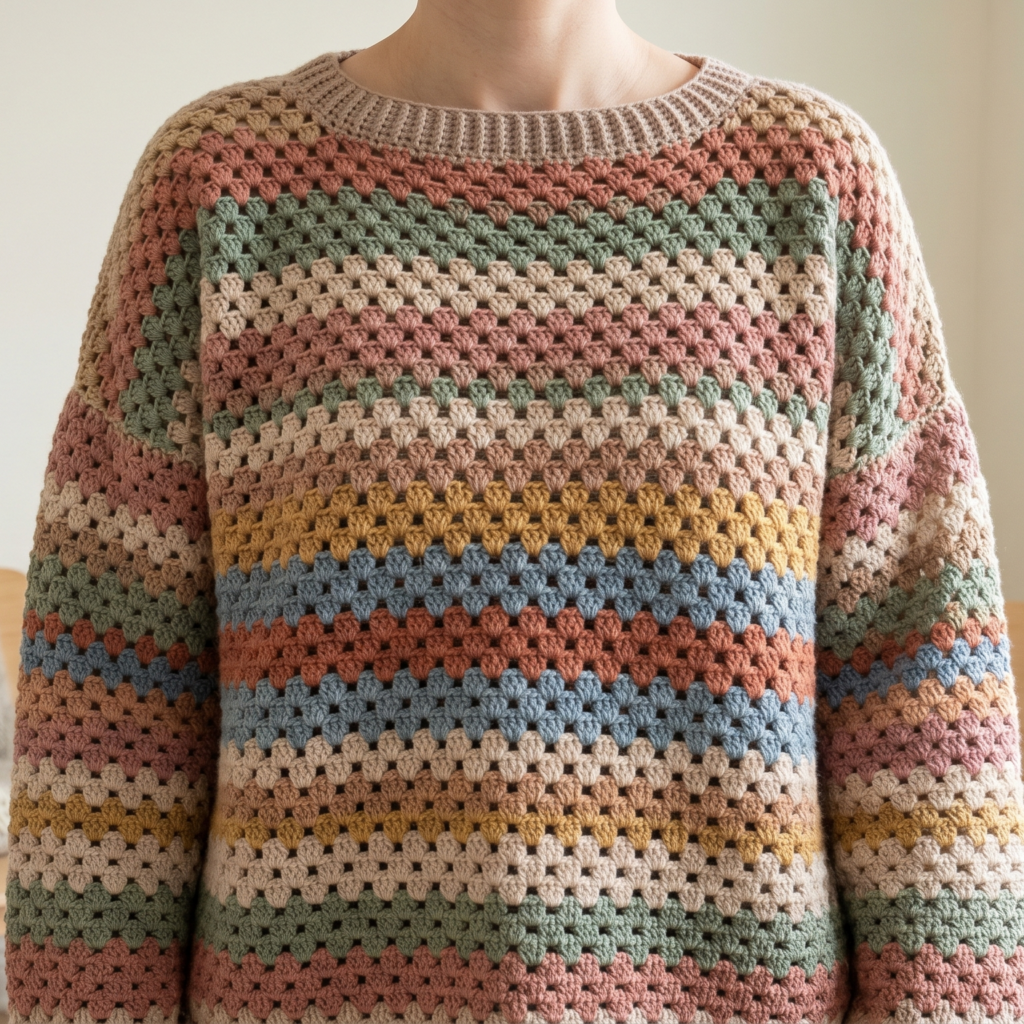
A granny striped oversized pullover feels relaxed, colorful, and full of handmade charm. The granny stitch gives it a classic crochet look, while the oversized silhouette makes it easy to wear and style. This is a wonderful sweater if you love a cozy, slightly vintage feel with modern comfort.
Step-by-step guide
Step 1: Choose your stripe colors
Decide on a palette that feels balanced. You can use bright rainbow tones, soft pastels, or muted earthy shades depending on the look you want. Since the sweater is oversized, the stripes can be playful and bold without feeling too busy.
The colors give the sweater its personality.
Step 2: Take your measurements
Even though the sweater is oversized, you still need accurate measurements for length, sleeves, and shoulder width. Oversized does not mean shapeless; it just means relaxed and roomy in a thoughtful way.
Good sizing helps the pullover drape well.
Step 3: Crochet the front and back panels
Work the front and back panels in granny stripes. Keep the cluster spacing even so the stripes remain neat and visible. The granny stitch will create a soft open texture that feels cozy and familiar.
The stripes are the central style element.
Step 4: Alternate colors smoothly
Change colors at the end of rows or rounds, depending on your construction. Keep the transitions clean so the stripes look polished. If you want a more modern feel, keep the stripe widths consistent.
Color changes help the sweater feel lively.
Step 5: Shape the neckline
Create a neckline that suits the oversized style. A slightly wide crew neck, boat neck, or relaxed scoop can work beautifully. Keep the shaping smooth so the sweater still looks intentional and flattering.
Step 6: Add roomy sleeves
Crochet the sleeves to match the relaxed silhouette. The sleeves should feel loose and comfortable, but still finished at the cuffs so they do not look too bulky. A simple taper can help balance the oversized body.
Step 7: Join and finish
Sew the panels together neatly at the shoulders and sides. Add ribbing or a clean border at the neckline, cuffs, and hem to bring the whole piece together. Because the sweater is oversized, the finishing details help it look more polished.
Step 8: Block the sweater
Blocking helps the stripes settle evenly and gives the oversized shape a softer, more refined drape. It is especially useful if you want the sweater to lay nicely when worn.
Helpful tips
This pullover looks great in cheerful colors, faded retro palettes, or soft neutrals. If you want it to feel extra cozy, choose a yarn with good softness and a bit of drape. It is a perfect sweater for relaxed everyday wear.
5. Crochet Honeycomb Stitch Pullover Pattern
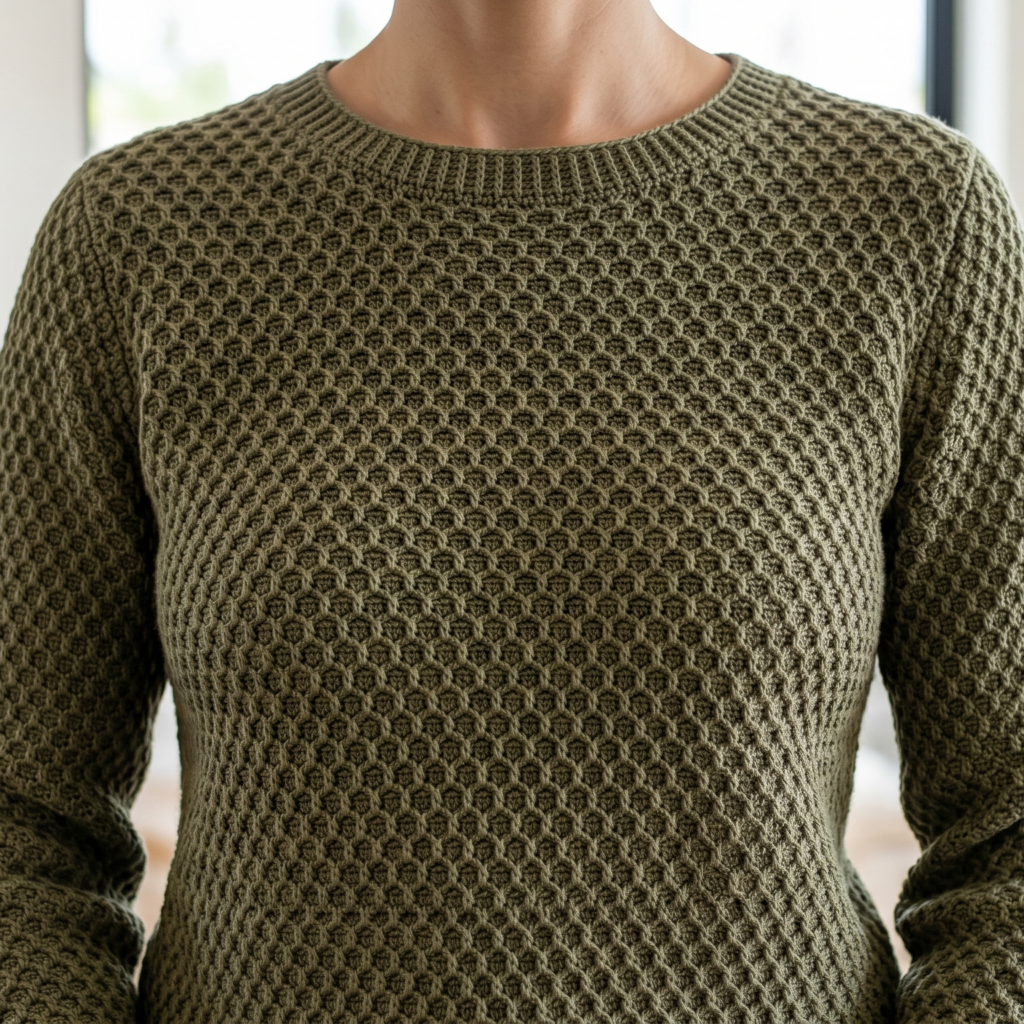
A honeycomb stitch pullover feels rich, textured, and slightly elevated. The honeycomb pattern creates a beautiful dimensional fabric that looks detailed without needing extra embellishment. It is a great sweater if you want something that feels classic but still interesting enough to stand out.
Step-by-step guide
Step 1: Choose a yarn with structure
Honeycomb stitch looks best in yarn that holds texture well. Wool blends, cotton blends, or soft acrylic yarns are all good options. Solid colors or very subtle tonal shades often work especially well because they let the stitch texture shine.
The yarn should highlight the honeycomb detail.
Step 2: Measure for fit
Take accurate body measurements before beginning. Honeycomb stitch creates a dense, textured fabric, so you will want enough room for comfort and layering. Decide whether you want the sweater fitted or slightly relaxed.
A good fit helps the texture sit comfortably.
Step 3: Crochet the front and back
Work the front and back panels in the honeycomb stitch repeat. The pattern usually creates a raised, geometric texture that looks beautifully structured. Keep the stitch count consistent so the texture stays even.
The stitch pattern is the highlight of the sweater.
Step 4: Shape the neckline and armholes
As you work the panels, shape the neckline and armholes gradually. Because the stitch is textured, it is important to keep the shaping smooth so the sweater does not feel bulky at the edges.
Step 5: Add the sleeves
Crochet the sleeves in honeycomb stitch or a simpler matching texture. If you want the body to remain the focus, you can use a smoother stitch for the sleeves and let the torso carry the texture. Keep the sleeves proportionate to the body.
The sleeves should complement the textured body.
Step 6: Join the panels
Sew the shoulders and sides carefully so the texture aligns as neatly as possible. Clean seams help a textured sweater feel more finished. Take your time with the joins because they are very visible in a structured fabric.
Step 7: Add borders
Finish the neckline, cuffs, and hem with ribbing or a clean border. A simple edge frames the honeycomb texture beautifully and keeps the sweater from feeling too heavy.
Step 8: Block carefully
Blocking helps open the stitch pattern and evens out the texture. This step can make a huge difference in how polished the sweater looks when complete.
Helpful tips
This sweater looks especially good in earthy neutrals, olive, camel, gray, or deep navy. If you want a more modern wardrobe staple, choose a single rich color and let the texture do the talking. It is a beautiful pullover for anyone who loves tactile, timeless crochet.
Conclusion
Crochet pullover sweaters are some of the most rewarding garments to make because they combine warmth, style, and creativity in one project. They can be simple or textured, fitted or oversized, bold or calm, and that flexibility is what makes them such dependable pieces in a handmade wardrobe. A well-made pullover is the kind of sweater you reach for again and again because it feels good to wear and even better to know you made it yourself.
These five patterns each bring something different. The Stony Shore pullover feels calm and coastal. The flared sleeves pullover is soft and fashion-forward. The moss stitch pullover is textured and timeless. The granny striped oversized pullover is colorful and relaxed. The honeycomb stitch pullover is rich and structured. Together, they show how much variety you can create with crochet while keeping the result stylish and wearable.
Whether you are making your first sweater or adding another favorite to your handmade wardrobe, these pullover patterns are a beautiful place to begin. With the right yarn, careful shaping, and thoughtful finishing, your crochet pullover can become one of those pieces you wear on repeat season after season.