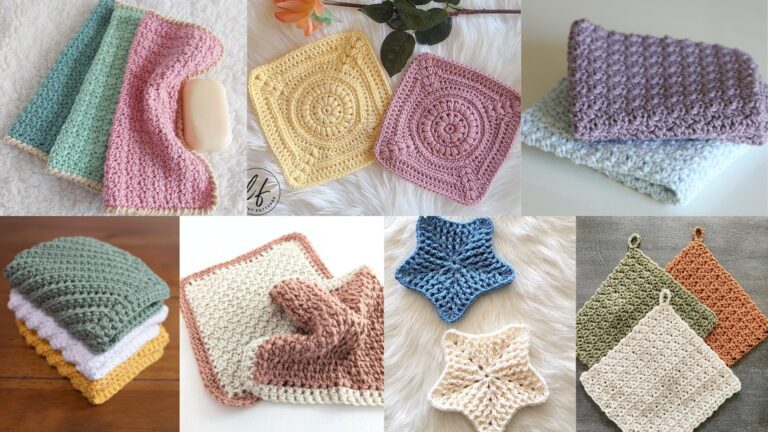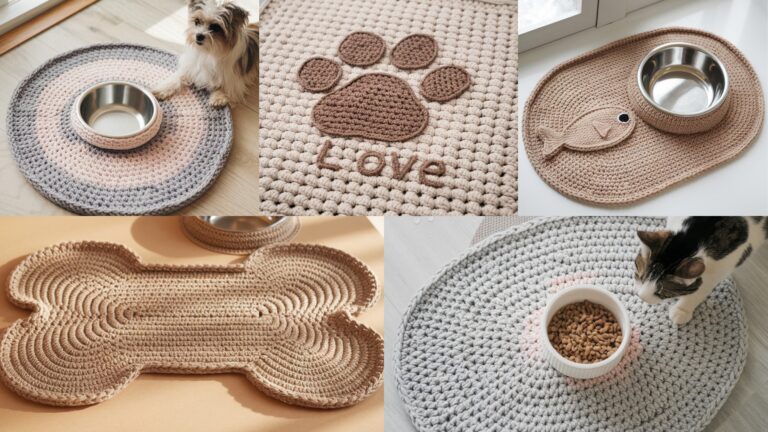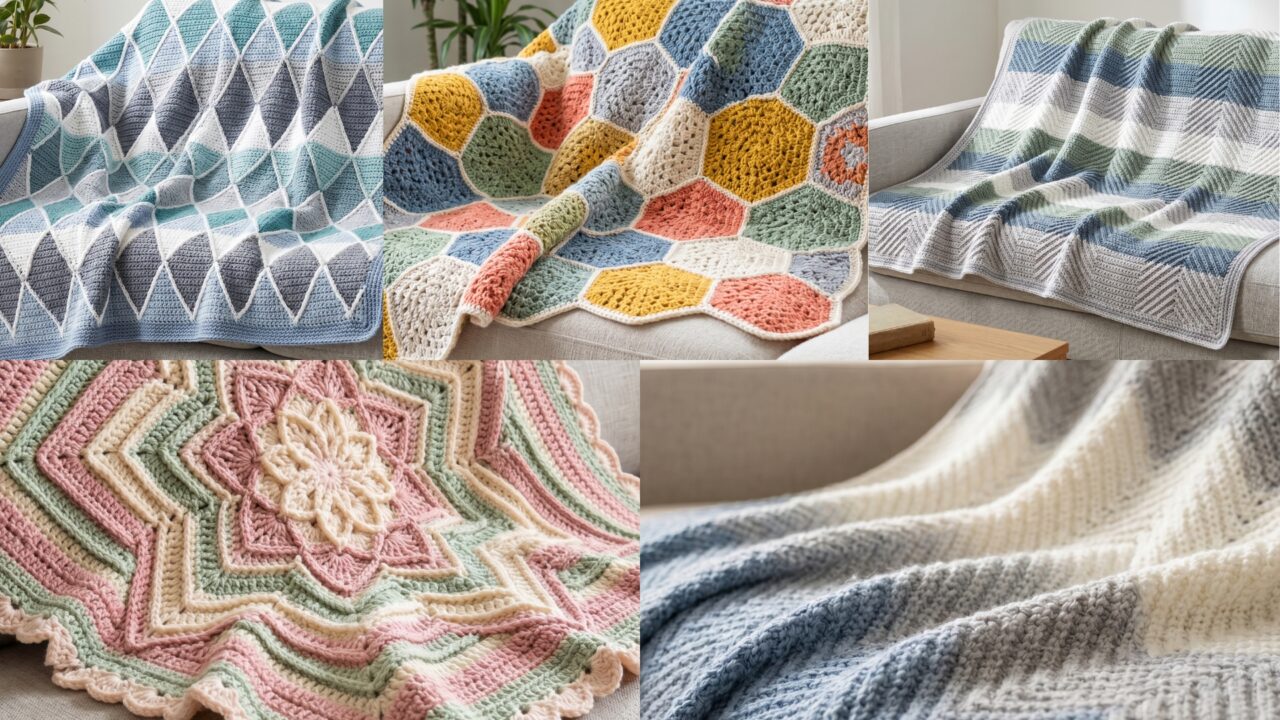
Crochet afghans are one of the most rewarding projects you can make by hand. They are warm, beautiful, practical, and endlessly customizable. Whether you want a cozy throw for your sofa, a meaningful handmade gift, or a relaxing project to work on in small sections, afghan patterns are a wonderful place to start. The best part is that you do not need to be an expert crocheter to make something stunning. With the right pattern, a little patience, and consistent stitches, you can create an afghan that looks polished and timeless.
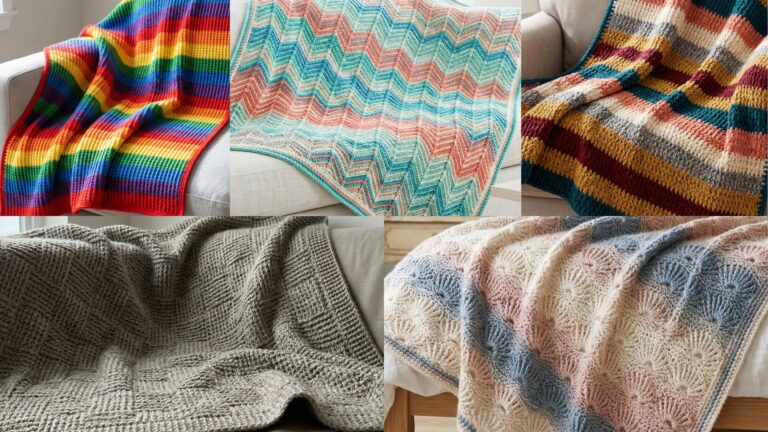
This collection brings together five eye-catching crochet afghan patterns, each with its own texture, color style, and design appeal. Some are bold and graphic, while others feel soft, classic, and decorative. No matter your style, you will find at least one pattern here that fits your taste and skill level.
Quick Notes
Before you start, keep these helpful points in mind:
- Afghan sizes can be adjusted easily by changing the starting chain or by adding more repeats.
- Yarn choice changes the final look a lot. Chunky yarn creates a heavier, faster project, while medium-weight yarn gives a lighter, more flexible blanket.
- Tension matters. Try to keep your stitches even so the finished piece lies flat.
- Always make a small swatch first if you want your afghan to match a specific size.
- If your pattern uses multiple colors, weave in ends as you go to save time later.
- Blocking can help the afghan look more even and polished, especially for motifs and geometric shapes.
- Read through the full instructions before beginning so you understand the stitch sequence and color changes.
Common Materials
Most of the afghan patterns below can be made with these basic supplies:
- Worsted weight yarn or bulky yarn, depending on the design
- Crochet hook sized to match your yarn
- Yarn needle for weaving in ends
- Scissors
- Stitch markers
- Measuring tape
- Blocking mats and pins, optional but helpful
- A row counter, optional
A few general yarn tips:
- For a soft, cozy throw, choose acrylic, cotton-acrylic blends, or washable wool.
- For texture-heavy patterns, medium or light colors help the stitch work stand out.
- For bold geometric designs, use high-contrast color combinations.
- If the afghan is for a child or baby, always choose soft, washable yarn that feels comfortable on the skin.
1. Crochet Fading Colors Zig Zag Afghan Pattern
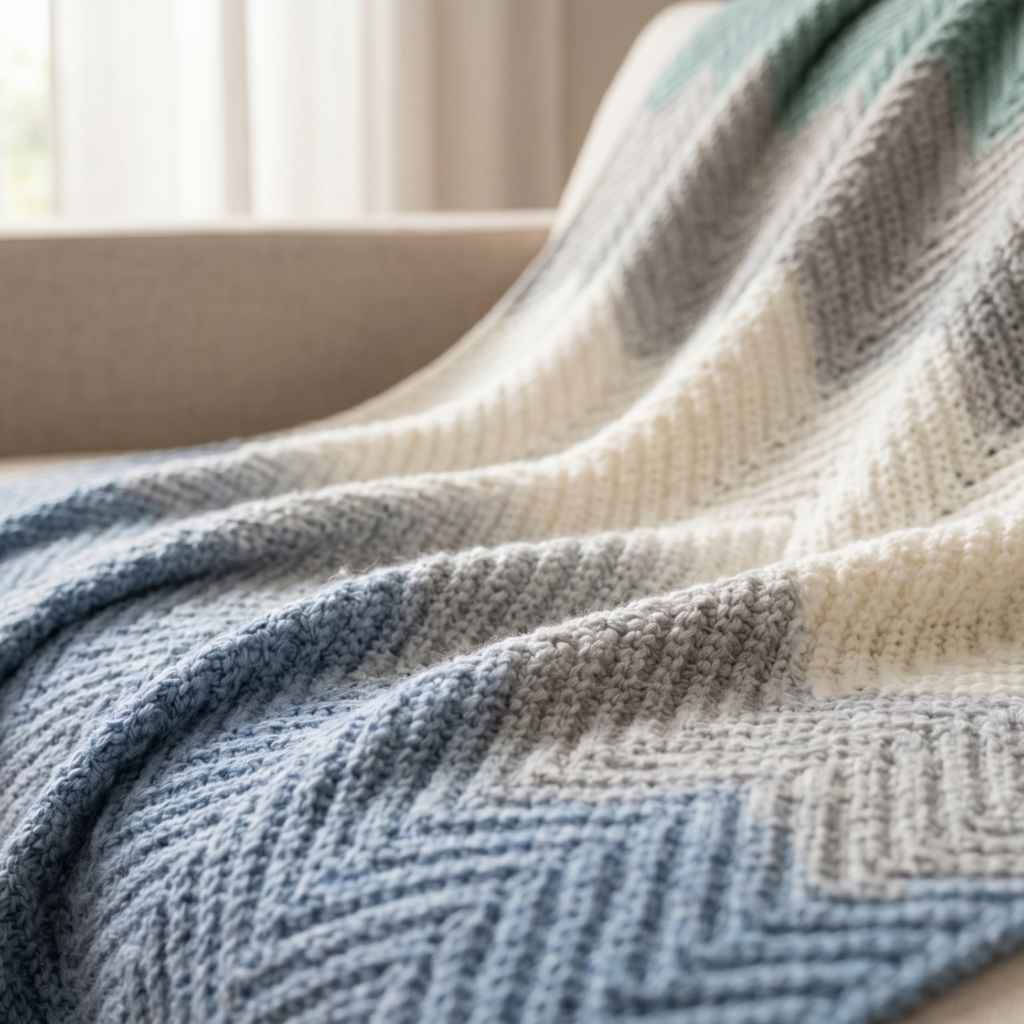
The fading colors zig zag afghan is a beautiful choice if you love movement and color blending. The zig zag design gives the blanket a lively, modern look, while the fading color effect softens the overall appearance. This pattern is especially lovely when you use shades from the same color family, such as blue to white, pink to cream, or green to gold. It can also be made with a rainbow fade for a brighter, more playful result.
Skill Level
Beginner to intermediate
Materials
- Worsted weight yarn in 4 to 6 coordinating colors
- Crochet hook size H/8 (5 mm) or size needed for gauge
- Yarn needle
- Scissors
- Stitch markers
Suggested Finished Size
Approximately 45 x 60 inches for a throw, but size can be adjusted by adding or removing repeat sections.
Pattern Idea
This afghan uses a repeating zig zag stitch sequence with gradual color transitions. You will work in rows, increasing and decreasing stitches to create the chevron shape. The fade effect comes from changing colors slowly across the blanket.
Stitch Guide
You may use the following basic stitches:
- Chain
- Single crochet
- Half double crochet
- Double crochet
- Increase and decrease stitches as needed for the zig zag points
Step-by-Step Guide
1. Start with your foundation chain
Make a chain in multiples that match the zig zag repeat. A common starting point is a chain that allows several peaks and valleys across the row. Add turning chains as needed for your chosen stitch height.
2. Work the first row carefully
The first row sets the direction for the whole pattern. Follow the increase and decrease sequence to form the first zig zag points. Keep your stitch count accurate so the edge stays even.
3. Build the chevron shape
Continue repeating the increase and decrease structure. You will notice the peaks and dips begin to appear clearly after a few rows. This is what gives the afghan its signature movement.
4. Introduce the color fade
To create the fading effect, switch yarn colors gradually. You can do this by:
- Changing colors every few rows
- Blending colors in softer transitions
- Using a gradient yarn with a solid companion color
- Repeating lighter shades in one direction and darker shades in the other
If you want a very soft fade, use colors that are close in tone. If you want a bold fade, use stronger contrast between each section.
5. Keep your tension steady
Zig zag patterns can sometimes curl or wave if the tension is too tight. Relax your hands and check the edges often. If the afghan begins to pull inward, try a larger hook.
6. Repeat until the blanket reaches the desired length
Continue the row pattern and color changes until the afghan is the size you want. Measure occasionally so the blanket stays on track.
7. Finish the border
A simple border works beautifully with this design. Try single crochet, crab stitch, or a few rounds of double crochet to frame the zig zag edges neatly.
Helpful Tips
- Count your stitches often because one missed decrease can disrupt the shape.
- Use stitch markers to mark the first and last stitch of each row.
- Weave in ends as you go if you are changing colors often.
- If the points look uneven, blocking can help improve the final shape.
Why You Will Love This Pattern
This afghan looks impressive without being overly complicated. The movement of the zig zags gives it energy, while the fading colors make it feel calm and elegant. It is a lovely project for a living room throw, gift blanket, or bedroom accent piece.
2. Crochet Bavarian Stitch Afghan Pattern
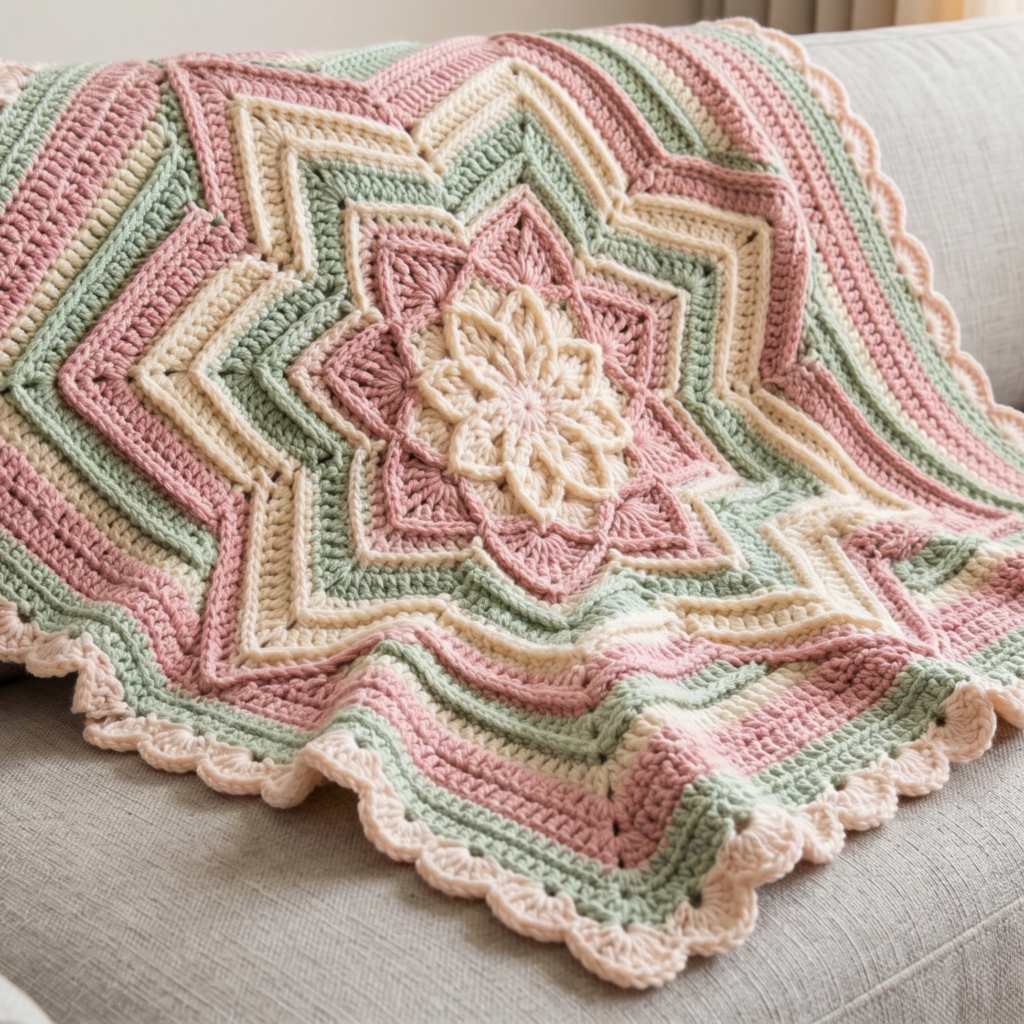
The Bavarian stitch afghan has a rich, textured appearance that feels classic and decorative. It is known for its layered, star-like structure and detailed look. Even though it appears complex, it is often made from repeating sections that become easier once you understand the stitch rhythm. This makes it a satisfying project for crocheters who want something elegant and textured.
Skill Level
Intermediate
Materials
- Worsted weight yarn in 1 to 3 colors
- Crochet hook size G/6 (4 mm) or H/8 (5 mm), depending on yarn and desired drape
- Yarn needle
- Scissors
- Stitch markers
Suggested Finished Size
Approximately 40 x 56 inches, depending on motif size and border choice.
Pattern Idea
The Bavarian stitch is often worked in motif-style sections that are joined together, or as a continuous blanket built from repeating rounds. The motif creates a raised, dimensional look that makes the blanket feel luxurious and detailed.
Stitch Guide
You may use:
- Chain
- Single crochet
- Half double crochet
- Double crochet
- Treble crochet
- Slip stitch
- Front post or back post stitches, depending on your version
Step-by-Step Guide
1. Begin with a center ring or square base
The Bavarian stitch often starts from a small center ring. You can make a magic ring or chain and join to form a circle. This becomes the foundation for the layered stitch pattern.
2. Build the first round of the motif
Work the first round carefully, making evenly spaced stitches that spread outward from the center. The shape should begin to resemble a small textured flower or star.
3. Add the raised sections
The next rounds usually introduce taller stitches and cluster-like sections. These are what create the layered petals or fan shapes that make the Bavarian stitch so distinctive.
4. Keep your corners balanced
If you are turning the motif into a square, pay attention to the corners. The corner spaces should remain open enough for the blanket to lay flat. Uneven corners can make the fabric warp.
5. Continue the pattern around the motif
Repeat the stitch sequence around each side. The design often grows in stages, with the layers building outward in a structured way. Take your time and count carefully.
6. Join motifs if needed
If your blanket is made from separate motifs, make enough squares or medallions and join them with slip stitch, single crochet join, or mattress-style joining. Arrange them before joining so the layout is balanced.
7. Add the border
Because Bavarian stitch already has strong texture, the border should be simple. A few rounds of single crochet or half double crochet usually work well.
Helpful Tips
- This pattern looks best when your stitches are consistent and slightly relaxed.
- Solid yarn colors show the stitch structure well, but two-tone combinations can highlight the layers beautifully.
- Use a smooth yarn rather than fuzzy yarn so the texture remains visible.
- Block motifs before joining if they need shaping.
Why You Will Love This Pattern
The Bavarian stitch afghan has a rich, heirloom feel. It looks intricate and polished, making it a wonderful choice for anyone who wants a blanket that feels special and decorative. It is ideal for gifts and formal living spaces.
3. Crochet Hexagon Granny Squares Afghan Pattern
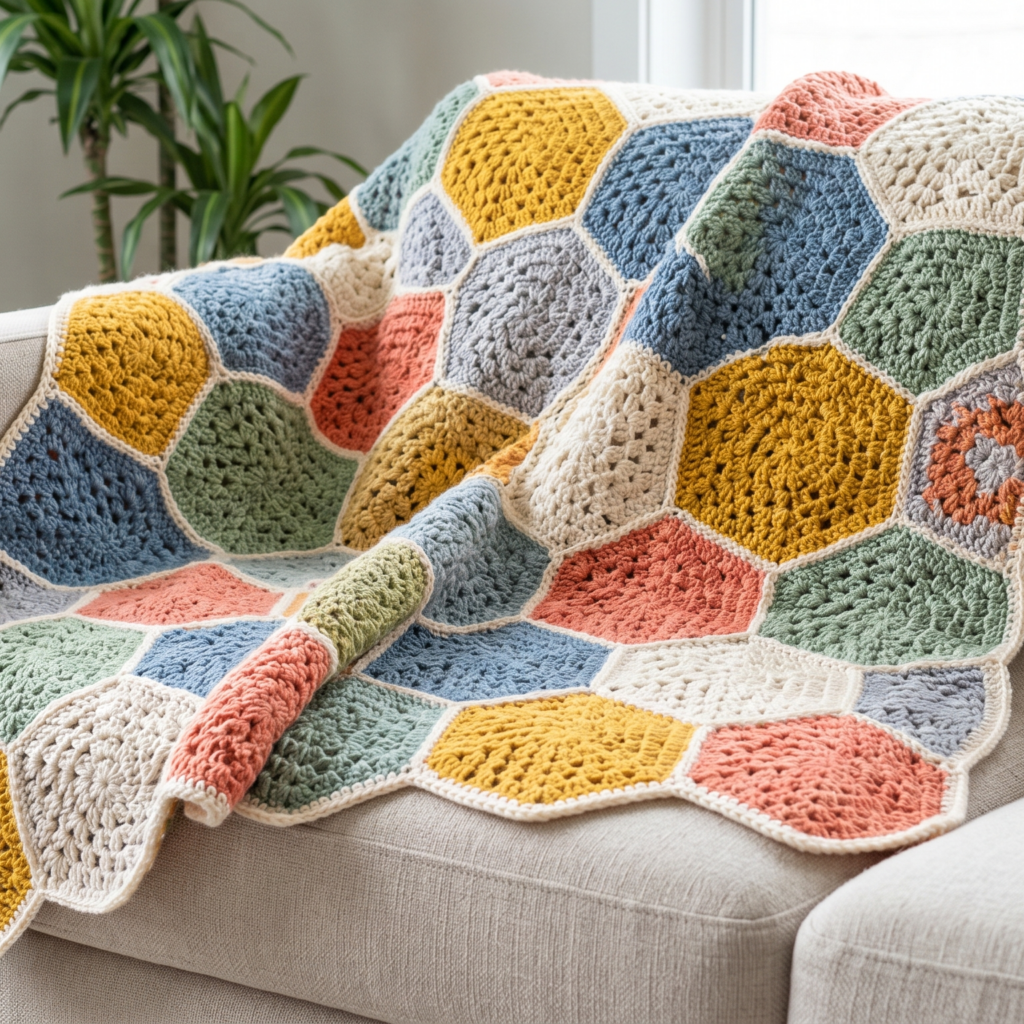
The hexagon granny squares afghan is a fresh take on a classic idea. Instead of traditional squares, this design uses hexagon motifs, which create a honeycomb-style layout full of visual interest. It is a fun project because you can play with color in each motif and arrange the hexagons into countless beautiful combinations.
Skill Level
Beginner to intermediate
Materials
- Worsted weight yarn in multiple colors
- Crochet hook size H/8 (5 mm) or size needed for your yarn
- Yarn needle
- Scissors
- Stitch markers
- Optional blocking mats
Suggested Finished Size
Approximately 42 x 58 inches, depending on the number and size of hexagons used.
Pattern Idea
Each hexagon is worked in rounds from the center outward. The motifs are then joined to create a complete afghan. This is a wonderful scrap yarn project because every hexagon can be a different color.
Stitch Guide
You may use:
- Chain
- Slip stitch
- Single crochet
- Half double crochet
- Double crochet
- Chain spaces
Step-by-Step Guide
1. Make the center ring
Start each hexagon with a magic ring or chain ring. This creates the center point of the motif.
2. Work the first round
Create the first round of stitches around the ring. This round forms the center shape and prepares the motif for the hexagon edges.
3. Build the six sides
The second and third rounds usually begin forming the six-sided shape. You will work groups of stitches separated by chain spaces to define the sides and corners.
4. Continue adding rounds
Keep repeating the pattern until each hexagon reaches the size you want. Most hexagons are made with several rounds, depending on whether you want a small motif or a larger one.
5. Make enough hexagons for the afghan
Before joining, decide on the blanket size and layout. Lay the motifs out on a flat surface to test the arrangement. This helps you see how the colors work together.
6. Join the hexagons
You can join them as you go or sew them together later. Common joining methods include:
- Slip stitch join
- Single crochet join
- Whip stitch
- Join-as-you-go method
7. Fill the edges if needed
Because hexagons create uneven outer edges, you may need half motifs or filler sections around the border. This helps create a straight finished rectangle.
8. Add the final border
Finish with a border that smooths the outer edge. Single crochet or shell stitch borders both work nicely.
Helpful Tips
- Plan your color palette before starting to avoid uneven placement.
- Use leftover yarn to make a coordinated scrap afghan.
- Keep motif sizes consistent so joining is easier.
- Count round repeats carefully so all hexagons match.
Why You Will Love This Pattern
This afghan feels playful, creative, and visually rich. The hexagon layout offers a modern twist on traditional granny crochet, and the motif-based construction makes it easy to work on in smaller sections.
4. Crochet Cool Diamonds Afghan Pattern
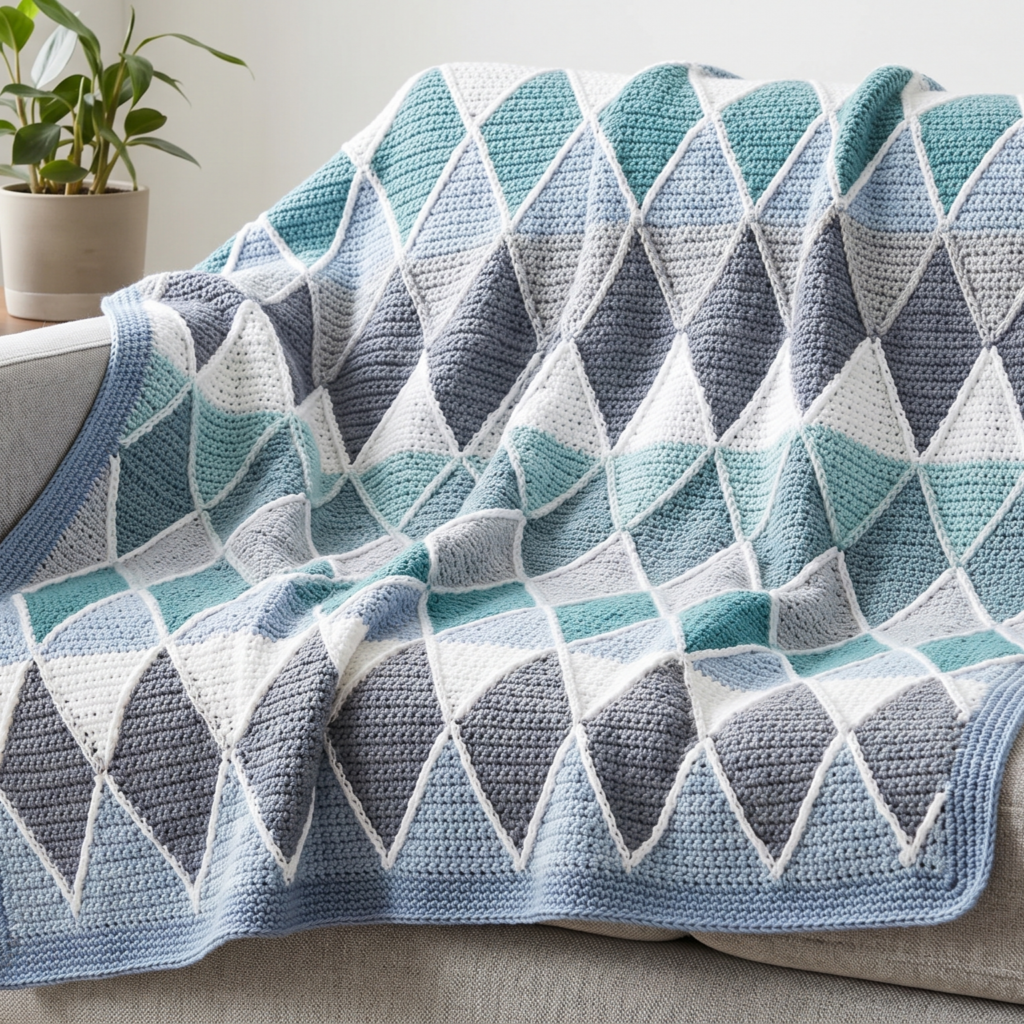
The cool diamonds afghan is a striking geometric design that gives the blanket a crisp, clean look. The diamond shapes can be subtle or bold depending on your color choices. This pattern is ideal if you enjoy structured designs that feel modern and stylish. It works especially well with cool colors like blue, gray, silver, teal, and white.
Skill Level
Intermediate
Materials
- Worsted weight yarn in 2 to 4 colors
- Crochet hook size H/8 (5 mm) or suitable hook for your yarn
- Yarn needle
- Scissors
- Stitch markers
- Measuring tape
Suggested Finished Size
Approximately 44 x 60 inches for a throw, adjustable by changing stitch count and repeats.
Pattern Idea
The diamond effect is created by strategically placed increases, decreases, or color blocks. Depending on the version you make, the diamonds may appear as solid shapes, open lace-style motifs, or textured panels.
Stitch Guide
You may use:
- Chain
- Single crochet
- Half double crochet
- Double crochet
- Decrease stitches
- Color changes
Step-by-Step Guide
1. Plan the diamond layout
Before crocheting, decide whether your diamonds will run in rows, diagonals, or repeating panels. This helps you understand how the shapes will flow across the blanket.
2. Begin with the foundation chain
Chain the required number for your chosen repeat. The chain should allow the diamond shapes to form evenly across the width of the afghan.
3. Work the shaping rows
To form diamonds, you will usually increase stitches toward the center of the shape and decrease toward the edge. This creates the pointed top and bottom of each diamond.
4. Use color to enhance the shape
Cool diamond patterns look especially strong when contrasting yarn colors are used. You can alternate:
- Light and dark shades
- Solid and variegated yarn
- Background color with bold diamond outlines
- One color family in gradually changing tones
5. Keep the rows aligned
Geometric patterns need careful stitch counting. A small mistake can shift the diamond placement. Check each row before moving on to the next.
6. Repeat until the blanket grows
Continue the stitch repeat until the afghan reaches the desired length. If the pattern includes repeated diamond sections, maintain the same spacing for a balanced look.
7. Add a clean border
A simple border is best because the diamond pattern already brings a lot of visual detail. Try a narrow single crochet edge or a wider double crochet frame if you want a more finished look.
Helpful Tips
- Use stitch markers to mark the center of each diamond if needed.
- Blocking is especially helpful for geometric blankets.
- Keep yarn tension steady so the diamonds remain crisp.
- A monochromatic cool palette gives the blanket a calm, elegant style.
Why You Will Love This Pattern
The cool diamonds afghan looks neat, modern, and highly structured. It is a great choice for anyone who enjoys bold geometric designs with a polished finish. It can feel both masculine and feminine depending on the color palette you choose.
5. Crochet Striped Arrowhead Afghan Pattern
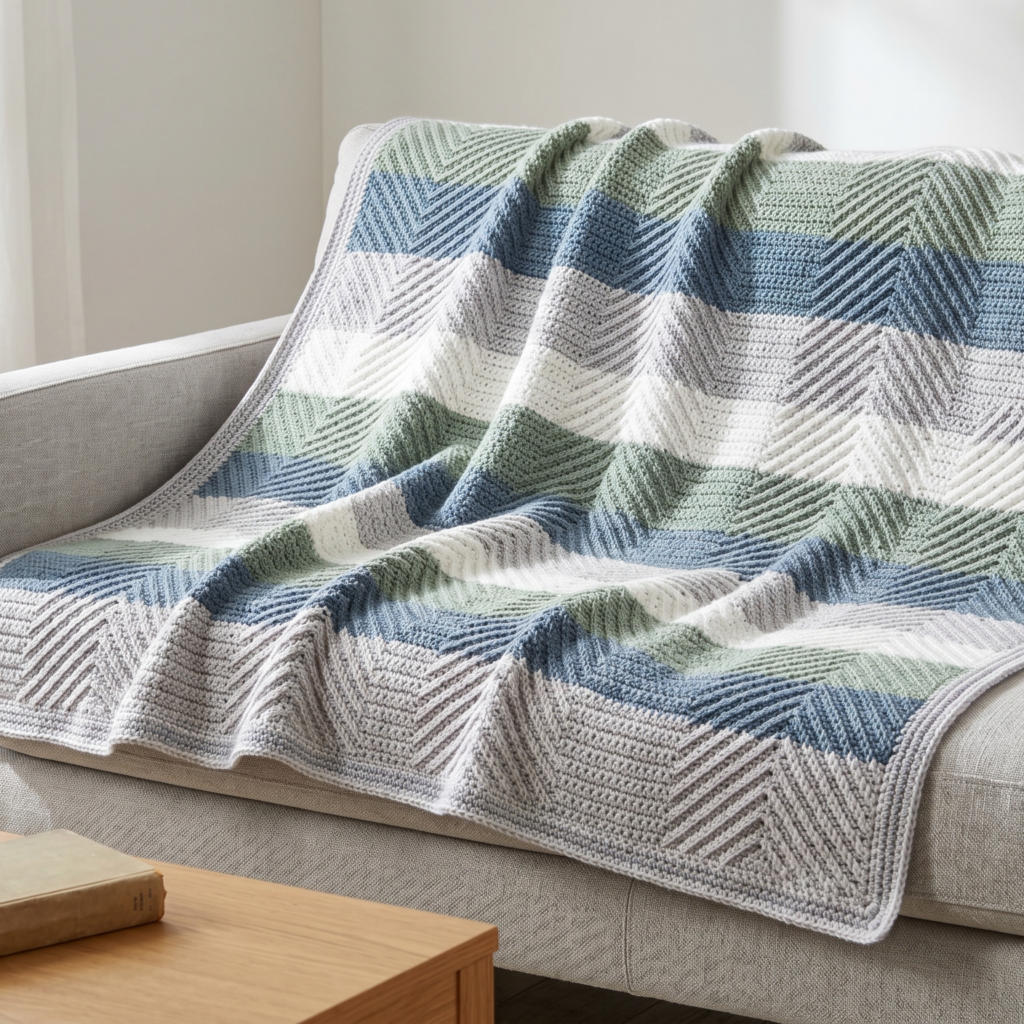
The striped arrowhead afghan combines movement and rhythm in a way that feels both classic and contemporary. The arrowhead shape gives the blanket a directional, graphic look, while the stripes add color and balance. This is a lovely option if you enjoy patterns that feel clean but not plain.
Skill Level
Beginner to intermediate
Materials
- Worsted weight yarn in 3 to 5 colors
- Crochet hook size H/8 (5 mm) or size matching your yarn
- Yarn needle
- Scissors
- Stitch markers
- Measuring tape
Suggested Finished Size
Approximately 46 x 62 inches, depending on the stitch repeat and stripe height.
Pattern Idea
This afghan is built using repeating arrowhead shapes that point upward or diagonally across the fabric. Stripes can be worked in regular bands or in soft color transitions to make the design more dynamic.
Stitch Guide
You may use:
- Chain
- Single crochet
- Half double crochet
- Double crochet
- Decrease stitches
- Color changes
Step-by-Step Guide
1. Decide on stripe placement
Before you begin, choose how wide you want each stripe to be. You may make equal stripes for a neat look or vary the widths for a more relaxed design.
2. Create the foundation chain
Start with a chain that supports the arrowhead stitch repeat. Make sure it is long enough to hold the number of motifs or directional shapes you want across the blanket.
3. Build the arrowhead shape
The arrowhead is formed by careful increases and decreases. As the rows progress, the stitches angle inward and outward, creating the pointed effect.
4. Change colors at stripe intervals
Switch colors after a set number of rows to create the striped effect. For a softer style, use related colors. For a bold style, use contrasting shades.
5. Maintain straight edges
Stripes can make uneven edges easier to notice, so check your row ends often. Stitch markers can help keep the edges tidy and consistent.
6. Repeat the sequence
Continue the arrowhead shaping and stripe changes until the afghan reaches the desired size. Keep your measurements steady so the stripe pattern remains balanced from start to finish.
7. Add the finishing edge
A border helps the stripes and arrowhead shapes feel complete. Use a simple edge that does not compete with the pattern, such as single crochet or reverse single crochet.
Helpful Tips
- Choose colors with enough contrast so the stripes stand out clearly.
- If you want a more subtle blanket, use tonal colors in the same family.
- Weave in ends carefully because stripe patterns can create many yarn tails.
- A ruler or measuring tape helps keep stripe widths even.
Why You Will Love This Pattern
This afghan is visually interesting without feeling too busy. The arrowhead shapes add direction and energy, while the stripes keep the design organized and easy on the eyes. It is a great balance of style and simplicity.
Conclusion
Crochet afghans are more than just blankets. They are personal projects filled with color choices, stitch texture, and the comfort of making something useful by hand. Each of these five patterns offers a different style, so you can choose the one that fits your skill level, your home decor, or the person you are making it for.
If you want something bold and flowing, the fading colors zig zag afghan is a beautiful option. If you love rich texture, the Bavarian stitch blanket will give you that elegant, layered look. For a playful motif-based project, the hexagon granny squares afghan is full of creative possibilities. If you prefer crisp geometry, the cool diamonds afghan offers a modern and polished result. And if you enjoy clean movement with color, the striped arrowhead afghan is a wonderful choice.
No matter which one you begin first, the most important part is to take your time and enjoy the process. Crochet afghans grow row by row, and every stitch brings you closer to a cozy finished piece you can be proud of.