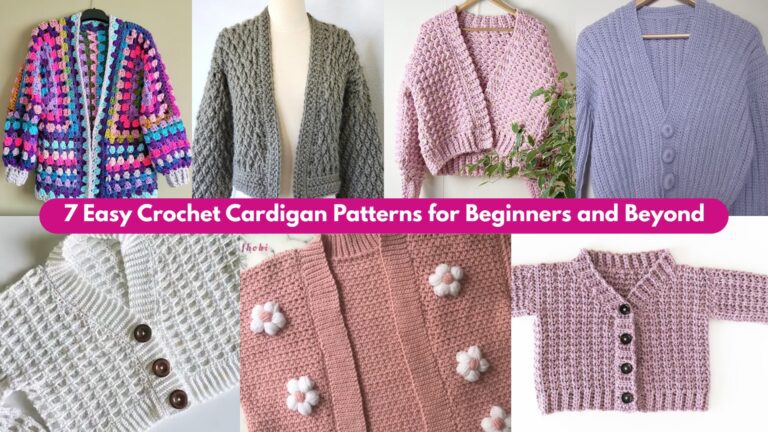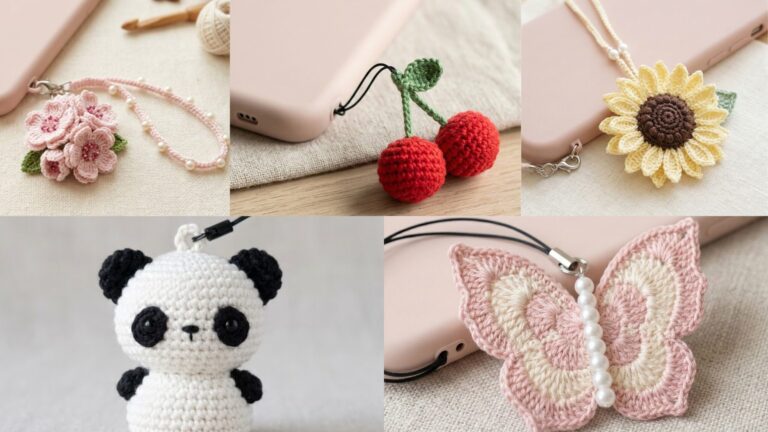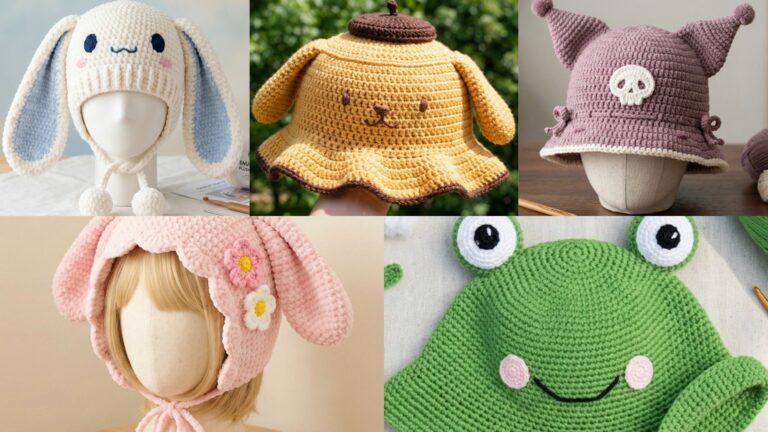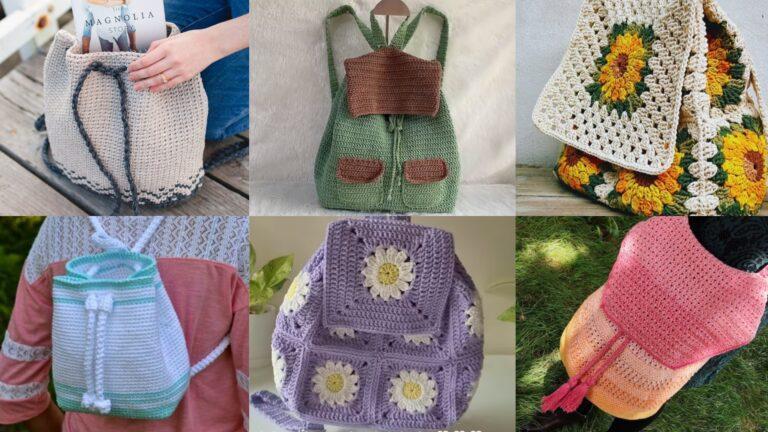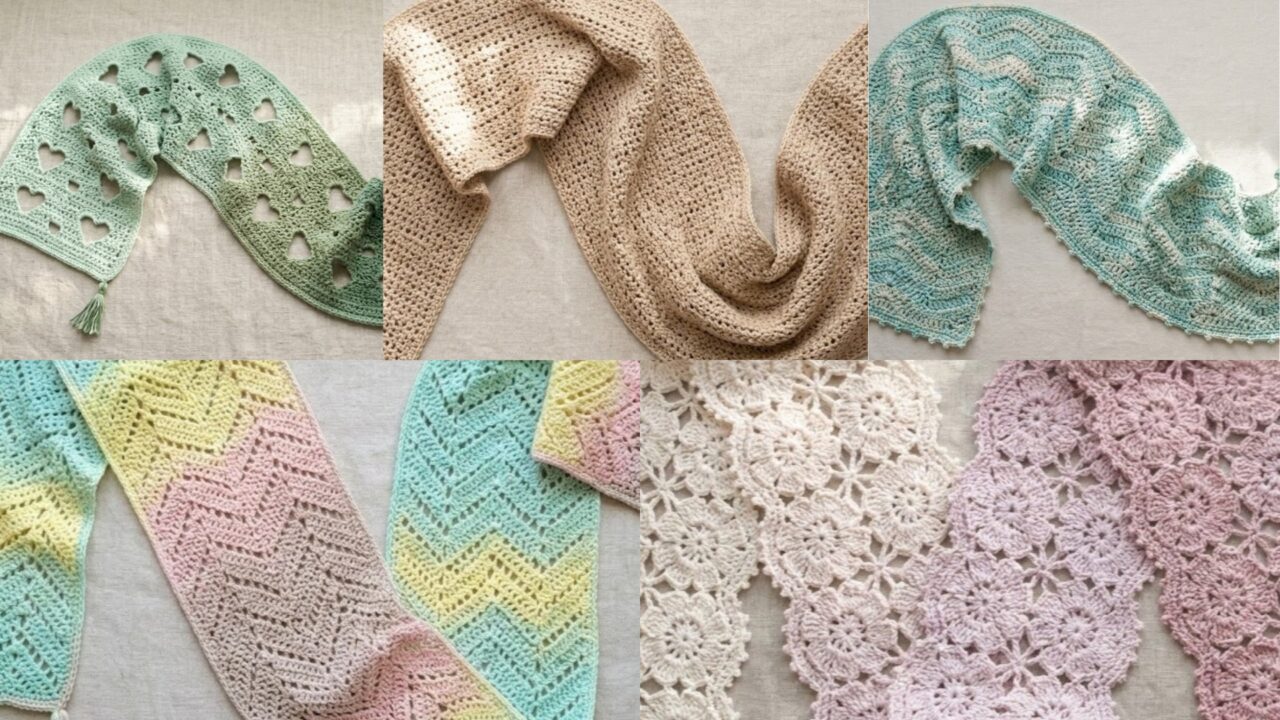
Light, breathable scarves add instant polish to a warm-weather outfit — they’re decorative without overheating, and they showcase stitch texture and color. This post contains five airy summer scarf patterns you can make for yourself or gift: Moss Stitch Thin Scarf, Lace Flower Scarf, Heart Scarf in Shades of Green, Spring Bloom Scarf (color-shaded, not floral), and Waves Stitch Scarf.
Each pattern includes: skill level, finished size, yarn/hook suggestions, stitch abbreviations, a detailed step-by-step pattern (including foundation, repeat, shaping/edging), blocking/finishing, variations, and care tips so you can jump in confidently.
Quick universal notes before you begin
- Summer scarves work best in natural fibers (cotton, linen, bamboo/viscose blends) or light blends with a breathable hand. Fingering, sport, or light DK weight yarns give the best airy drape.
- Use a hook 0.5–1.0 mm larger than the yarn label suggests to open the fabric for airflow, unless the pattern asks for structure.
- For all scarves, make a gauge swatch (4″ / 10 cm square) in the stitch pattern to check drape and stitch size. If your stitch is too dense, go up a hook; if too loose, go down a hook.
- Block every scarf lightly (pin to size and gently steam or wet-block) — blocking brings out lace, evens stitches, and sets edges.
- Abbreviations are listed per pattern but here are the common ones used across patterns: ch = chain, sc = single crochet, hdc = half double crochet, dc = double crochet, tr = treble crochet (US), sl st = slip stitch, st(s) = stitch(es), rep = repeat, RS = right side, WS = wrong side.
1. Crochet Moss Stitch Thin Scarf Pattern
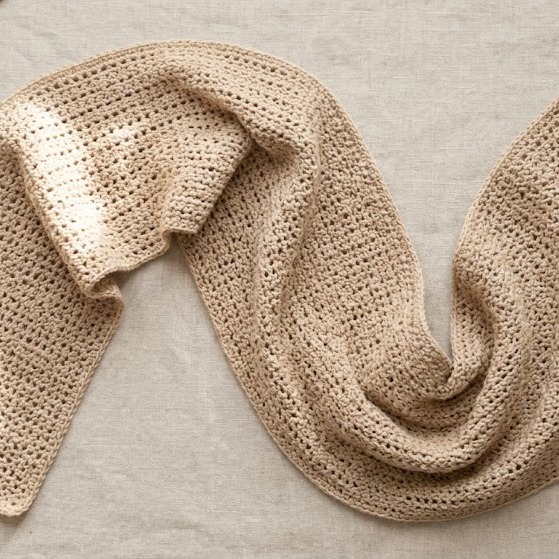
Skill level: Beginner–Intermediate
Finished size: approx 6.5″ × 66″ (16.5 cm × 168 cm) — long and narrow; adjust length to taste.
Yarn & hook: Fingering or sport cotton, ~200–260 yards (180–240 m). Hook: 3.5–4.5 mm (choose for open, airy fabric).
Gauge: 20 moss sts × 12 rows = 4″ (10 cm) with chosen yarn and hook (moss stitch rows counted as pairs of rows). Not strict; used to estimate length.
Why this stitch
Moss stitch (aka linen stitch) creates a woven, breathable fabric with tiny open spaces — ideal for a light scarf that keeps its shape.
Stitches & abbreviations used
- ch — chain
- sc — single crochet
- dc — double crochet
- (For a softer linen version we’ll use sc and ch to create the moss/linen pattern.)
Pattern notes
Moss stitch repeat: sc, ch1 worked across, then on next row you sc into the ch-1 spaces to alternate. That creates the woven effect.
Step-by-step
Foundation
- Ch 201 (or any odd number to reach desired width + 1). For a narrower scarf use 151; for wider, add 50 chains increments keeping odd count. (201 provides ~6.5″ width with fingering/sport and 4.5 mm hook; adjust if your gauge differs.)
Row 1 (RS)
- Sc in 2nd ch from hook, ch1, skip next ch, sc in next ch — repeat across to last chain; sc in last ch. Turn. (You will have set of sc and ch-1 spaces.)
Row 2 (WS)
- Ch1 (does not count as st), sc in first st, ch1, sc in next ch-1 space across; end with sc in last st. Turn.
Rows 3–end
- Repeat Row 2 until scarf reaches desired length (about 66″ / 168 cm for a long scarf — typically ~120–150 rows depending on gauge). End after Row 2 (so fabric is symmetrical). Fasten off and weave ends.
Edging (optional, polish)
- Option A — Narrow clean edge: With RS facing, join yarn at bottom corner and work 1 round of sc evenly around edge, working 3 sc in each corner to keep it flat. Fasten off.
- Option B — Slight scallop: sc 3, ch2, sl st in next st around for a tiny decorative edge.
Blocking & finishing
- Gently wet the scarf or spray with cool water, pin to dimensions on blocking mat, stretching gently to open the linen texture. Let dry completely.
- Weave in ends neatly into edge rows.
Variations & styling
- Make a two-color striped linen scarf by changing color every 20–30 rows; carry yarn or weave in ends at color changes.
- For extra drape, hold a lightweight bamboo yarn along with cotton and treat them as one.
Care
- Machine wash gentle in a mesh bag for cotton blends. Lay flat to dry. Avoid tumble dry to keep shape.
2. Crochet Lace Flower Scarf Pattern
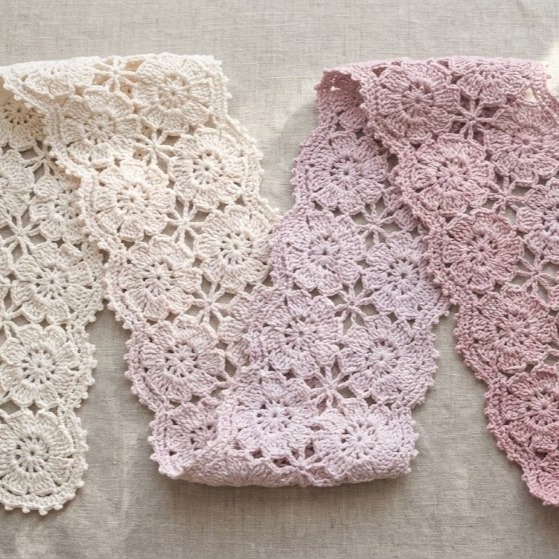
Skill level: Intermediate (lace repeats + joining motifs)
Finished size: approx 10″ × 72″ (25 cm × 183 cm) — wide and airy.
Yarn & hook: Sport / light DK cotton or bamboo; about 350–450 yards (320–410 m). Hook: 4.0–5.0 mm for open lace.
Gauge: One flower motif = approx 4–4.5″ across (depends on hook/yarn).
Concept
This scarf is made of repeating lace flower motifs joined in rows. The motifs are small floral clusters that form an open, decorative fabric. You can make it as a long scarf or a wrap by adding more motif rows.
Stitches & abbreviations
- ch, sc, dc, tr, dtr (double treble) — if you prefer, substitute tall stitches with dc for US users if your hook/yarn combo makes tr too lacy.
- ch-sp = chain space
- rep = repeat
- MR = magic ring
Motif (Flower) — one motif measures roughly 4″
Make a rectangular/oval flower tile that joins on two opposite sides.
Motif round-by-round (make 18–20 motifs for a scarf 10″ × 72″; adjust count)
- MR, ch3 (counts as dc), work 11 dc into MR. Join to top of ch3 with sl st. (12 dc) — circle base.
- Ch1, sc in next dc, ch3 repeat around (12 ch-3 loops). Join.
- Into each ch-3 loop work (sc, hdc, dc, tr, dc, hdc, sc) — small petal shell. Join. (You now have a ring of petals.)
- Round 4: ch4, sl st between petals to form a small lacy loop between petals — optional for extra lacing. Fasten off leaving 6″ tail for joining.
Tip: If you prefer rectangular motifs easier to join, work a small 6–8 row rectangle in lace stitch instead of round petals; the joining logic is the same.
Joining motifs
- Block each motif to the same size. Arrange motifs in a single long strip (motif-set × motif rows).
- Join motifs as you go using the join-as-you-go method: for the last round, when you reach an edge you want to join, replace the ch-loop with sl st into corresponding ch-loop of adjacent motif, ch1 (or use single crochet join for stronger seam).
- If you prefer a softer join, use a crochet hook with slip stitch skirts, or hand sew motifs with matching yarn using mattress stitch.
Scarf assembly (example layout)
- For a 10″ width, join two motifs across (side-by-side) and repeat 18–20 times lengthwise — this gives 2 motifs × 18 = 36 motifs total. Or for a narrower scarf use single column of motifs stacked vertically.
Edging
- Work 2 rounds of sc around entire joined piece to unify edges, then add a picot or scallop round: ch3, sl st in 1st ch for picot every 6–8 sc for small points.
Blocking & finishing
- Wet-block the finished scarf with pins to open lace and align motifs evenly. This step is essential for flower motifs to show their shape.
- Trim loose ends and secure join points with a needle where necessary.
Variations
- Make motifs in gradient colors for a soft ombré effect.
- Add a fringe made of longer chains and beads to the ends for a boho vibe.
Care
- Hand wash or gentle machine wash in a mesh bag; reshape while damp and dry flat.
3. Crochet Heart Scarf in Shades of Green Pattern
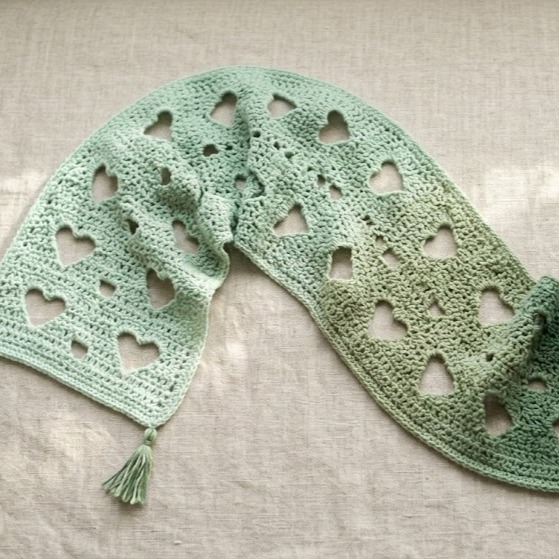
Skill level: Beginner–Intermediate (patterned motif repeats and color changes)
Finished size: approx 8″ × 68″ (20 cm × 173 cm) — standard scarf width/length.
Yarn & hook: Fingering / sport cotton in 3–4 shades of green (main + 2–3 accents). Total yardage ~300–420 yards. Hook: 4.0 mm for a gentle open fabric.
Gauge: 18 sts × 20 rows = 4″ in stated stitch pattern (estimate).
Concept
A narrow scarf made with a repeating heart lace motif in alternating green shades. Hearts appear in a staggered vertical repeat, made with simple dc/ch lace so the fabric stays light.
Stitches & abbreviations
- ch, sc, dc, tr, sk = skip, rep, RS/WS
- sp = space
Heart lace repeat (pattern unit)
This pattern uses a multiple of 12 + 1 chains for the width. For our width, chain 145 (multiple adaptation) or chain to reach desired width.
Foundation
- Ch 145 (or adjust to desired width, must be multiple of 12 + 1). Turn.
Row 1 (setup)
- Dc in 4th ch from hook (counts as dc + ch2 space foundation), ch2, sk 2 ch, dc in next ch across. Turn.
Row 2 (heart base)
- Ch3 (counts as dc), in next ch-2 sp work (dc, tr, dc) — makes the heart top; then ch1, sk next dc; dc in next ch-2 sp — this creates small arches. Turn.
Row 3 (lacing + heart shaping)
- Ch1, sc into top of each stitch across anchoring and into chain spaces to keep edges neat. Turn.
Row 4–Repeat
- Repeat Rows 2–3 to build the heart motif in vertical columns. Stagger the hearts by beginning Row 2 at offset chains every 2 repeats so hearts sit between hearts in adjacent columns. This staggers hearts and avoids a rigid grid.
Color changes
- Change color every 8–10 rows to create bands of green — use the seamless color change at the last dc of the row: drop old color, pick up new color and finish last yarn over with new color. Carry color along side or weave ends as you go.
End edging
- Work 2 rounds of sc in main color to neaten edges. For decorative finish, add small tassels at both ends using mixed shades of green.
Blocking & finishing
- Block lightly to open heart arches and set stitch definition.
- Trim fringe/tassels evenly.
Variations & styling
- Make the scarf asymmetrical by using one large heart repeat in the center band and narrow mesh on ends.
- Use variegated green yarn for softer transitions between bands.
Care
- Machine wash gentle for cotton blends; reshape and dry flat.
4. Crochet Spring Bloom Scarf Pattern
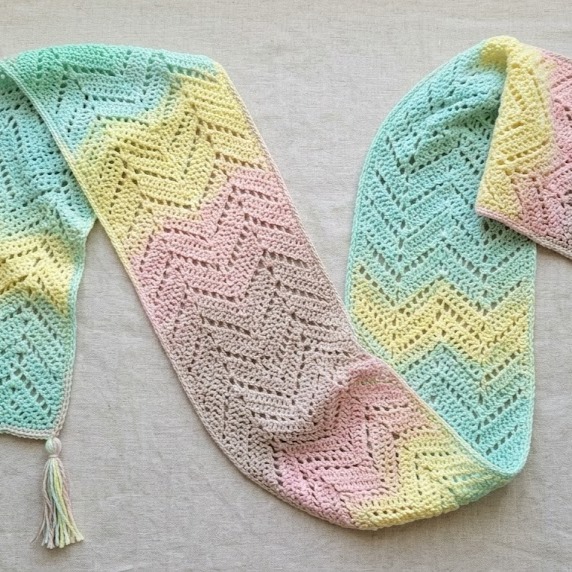
Skill level: Intermediate (long lace panels + color-shading technique)
Finished size: approx 9″ × 70–80″ (23 cm × 178–203 cm) — ideal wrap/scarf.
Yarn & hook: Light DK or sport weight yarn in 4–6 coordinated shades (spring palette — mint, pale aqua, soft lemon, blush, light taupe, etc.). Use 400–600 yards total. Hook: 4.0–5.0 mm for airy openness.
Gauge: One lace repeat (8 sts × 4 rows) ≈ 2″ (5 cm) for planning color repeats.
Concept
A long rectangular scarf worked in a geometric lace stitch (a 4–8 row repeat) with color shading — gradient bands or short color sections that read as “spring bloom” through tone transitions (no floral motifs). The lace is open but stable, perfect for warm weather.
Stitches & abbreviations
- ch, sc, dc, tr, v-st (dc, ch1, dc), sk, rep, RS/WS
Lace stitch pattern (8-row repeat example)
This is a light chevron-like open stitch that creates subtle texture.
Pattern repeat (multiple of 8 sts + 2)
- Ch 162 (multiple of 8 + 2 for width ~9″; adjust for desired width). Turn.
Row A (RS)
- Dc in 3rd ch from hook, ch1, sk 1 ch, dc in next 3 ch, v-st (dc, ch1, dc) in next ch, dc in next 3 ch, sk1, ch1 — repeat across; end with dc in last ch. Turn.
Row B
- Ch3, dc across into dc and v-st spaces as they appear, placing v-st over previous row’s v-st, and ch-1 to keep mesh aligned. Turn.
Rows 3–8
- Repeat Rows A–B across total 8 rows following lace chart: rows alternate placing double crochet clusters and v-stitches to create open chevrons. (If you prefer, substitute with a simpler fan lace: ch-3 dc fans separated by ch-1.) Work until piece reaches desired length.
Color shading plan
- Option 1 (soft gradient): Change color every 10–16 rows, moving from light to dark then back to light. This creates broad bands that read like a bloom of spring colors.
- Option 2 (short, rhythmic): Rotate colors every 4 rows in a repeating sequence across the scarf for a striped ombré effect.
- Carry color lightly along edges or weave in ends at each change for a tidy finish.
Edging & fringe
- Work 2 rounds of sc around scarf edges in the final color to tidy borders. Add long simple tassels in mixed shades every 6 inches along ends for playful movement.
Blocking & finishing
- Block the full scarf pinned to the final width and length — lace will bloom and open. Gently steam or wet-block and air dry.
- Weave in ends carefully so they don’t show through the lace holes.
Styling & variations
- Make a matching headband/neckkerchief by working a narrower strip in the same color sequence.
- For a lighter summer evening wrap, omit tassels and keep minimal edge.
Care
- Hand wash recommended for delicate blends; dry flat.
5. Crochet Waves Stitch Scarf Pattern
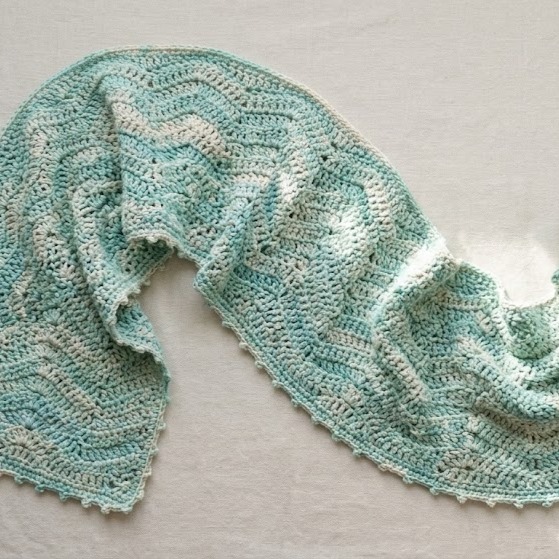
Skill level: Beginner–Intermediate (textured ripple/wave stitch)
Finished size: approx 8″ × 72″ (20 cm × 183 cm) — classic ripple scarf.
Yarn & hook: Sport/DK cotton (solid or variegated). ~350–450 yards. Hook: 4.5 mm for an airy ripple.
Gauge: One ripple repeat (12 sts × 4 rows) ≈ 3″ across.
Concept
A modern wavy/ripple stitch — gentle undulations in the fabric produce a cooling airflow and a stylish drape. Great for beginners who like rhythmic repeats.
Stitches & abbreviations
- ch, sc, hdc, dc, tr, rep, sk, dec (sc2tog), inc (2 sc in one st).
Simple wave (chevron) pattern (classic 12-st repeat)
This uses combinations of dc clusters and decreases to form waves.
Foundation
- Ch 145 (multiple of 12 + 1) or adjust for desired width. Turn.
Row 1 (setup)
- Dc in 4th ch from hook (counts as dc), dc in next 4 ch, tr in next ch, dc in next 4 ch, dc2tog over next 2 ch — repeat across; end with dc in last ch. Turn.
Row 2
- Ch3, dc in next 4 sts, tr in next st, dc in next 4 sts, dc2tog over next 2 sts — repeat across; end with dc in top of beginning ch-3. Turn.
Row 3
- Ch1, sc in each st across (this anchors waves). Turn.
Rows 4–end
- Repeat Rows 2–3 until scarf reaches desired length (~72″). Ending on an anchoring Row 3 keeps edges tidy. Fasten off.
Edge tidy
- Work 1 round of sc around, placing 3 sc in each corner to prevent curling. Optionally add picot edge every 10 sc for a delicate finish.
Blocking & finishing
- Waves benefit from a light steam block laid flat to even out undulations. Don’t over-stretch — preserve gentle curves.
Variations & colorplay
- Use a variegated yarn to let color shifts emphasize the waves.
- For a more pronounced ripple, use a larger hook or add an extra cluster in the crest.
Care
- Cotton blends: machine wash gentle; reshape damp and lay flat.
Finishing: seams, ends, and final styling
- Weaving in ends: Use a long tapestry needle and weave ends into the edge rows or into the wrong side of lace panels. For yarns that fray, secure ends with a small knot and bury the tail.
- Fringe & tassels: Keep tassels to about 4–6″ for scarves (long enough to swing, short enough to stay tidy). Use a cardboard template for consistent length.
- Blocking: For lace & open stitches, wet-block to set shape. For moss or waves, steam blocking and light shaping usually suffice. Always block on a clean surface and pin at measured intervals for symmetry.
- Label & care card: If gifting, include fiber content and care: e.g., “100% cotton — hand wash cool / gentle cycle in mesh bag, reshape and lay flat to dry.”
conclusion
These five airy scarf patterns span simple and meditative (Moss stitch), romantic lace (Lace Flower), playful motif work (Heart Shades of Green), color-forward shading (Spring Bloom), and graphic texture (Waves Stitch). Pick yarns with good drape (linen, cotton, bamboo blends) and a hook that opens the fabric just enough for airflow — the result will be scarves that look lightweight but still feel luxurious against summer skin.